Home About Us Doctors Technologies Services Diseases News Blog Contact
ქარ
Skin Diseases
Acne
What is acne? Acne is a very common skin condition that mainly affects the face, back, chest and shoulders. It is most common in adolescence, but can occur at any age. Who gets acne? People of all races and ages get acne, but it is most common in teenagers. Acne can persist into adulthood. Causes of acne Increased activity of the sebaceous gland and excessive production of fat Accumulation of dead skin cells in the pores. Bacterial growth in enlarged pores - in particular, Propionibacterium acne (P. acne) Factors that can increase the risk of developing acne: Hormonal changes genetics Medicines age Elements of acne: Comedones - in the form of black dots (open comedones) and white dots (closed comedones) Papules - small, red elements raised from the surface of the skin Pustules - inflammatory elements filled with pus Nodular rash - collects under the surface of the skin and can be painful Cysts - deep, painful, lumps. They are more likely to leave scars. Acne treatment There are several ways to treat acne. Each type of treatment varies based on age, acne type, and severity. The aim of the treatment is to remove the existing elements, stop the formation of new elements and prevent the development of scars. Actively used: Local medicines Oral medications. Acne is the most common skin condition and can affect mental health and self-esteem. Early treatment will prevent discomfort caused by acne breakouts.
Read More
Angioma
Read More
Atopic dermatitis
What is atopic dermatitis? Atopic eczema (atopic dermatitis) is one of the most common forms of eczema, a condition that causes itchy, dry, and inflamed skin. Atopic eczema is the most common type of eczema in children, often developing soon after birth. But it can also develop in adults. It is usually a long-term (chronic) condition, although in some children it may improve significantly or even disappear completely with age. Causes of atopic eczema Atopic dermatitis is multifactorial, meaning that there is not just one cause, but many possible causes, including genetic and environmental factors. Patients with atopic dermatitis have a defective skin barrier that is sensitive to dryness, environmental irritants, and allergens, leading to inflammation, itching, and the classic clinical findings of atopic dermatitis. The chances of developing atopic dermatitis are higher if there is a family history of atopic dermatitis, hay fever or asthma. Environmental triggers include exposure to tobacco smoke, fragrances and other compounds found in skin products and soaps, allergens (eg, dust mites), hot showers/sweating, food sensitivities, and synthetic fabrics such as polyester. How is atopic dermatitis manifested? The condition is quite common. About 1 in 10 infants and young children develop symptoms of atopic dermatitis. Although atopic eczema can affect any part of the body, it most commonly affects the hands in adults, and the flexor surfaces of the elbows and knees, face, and scalp in children. People with atopic eczema usually have periods when symptoms are less noticeable, as well as periods when symptoms are more severe. Symptoms can vary widely and range from mild to severe. Common symptoms are: - Dryness - Itching - Swelling and inflammation - Rash - Thickening and hardening of the skin - Areas covered with bark - Darkening of the skin around the eyes - An additional fold of skin under the eye, known as the Denny-Morgan fold. - Additional skin wrinkles on the hands and feet. - Sensitive and infection-prone skin Treatment of atopic eczema The four main components of treatment include: - avoiding aggravating factors, - daily skin care, - anti-inflammatory therapy - other additional methods. Although there is no cure for atopic dermatitis, it can be managed with the right treatment, which can help relieve symptoms and improve the condition over time. Many different treatments can be used to control symptoms and manage eczema, including: • Emollients (moisturizers) – Daily skin care includes using emollients twice a day within three minutes of getting out of a lukewarm shower or bath to prevent skin dryness. • Topical anti-inflammatory agents - used to reduce swelling, redness and itching during flare-ups Complications of atopic dermatitis People with atopic dermatitis can develop other, more important and serious medical conditions, such as skin infections and psychological complications.
Read More
Eczema
What is eczema? Eczema is a common skin condition causing itching, rashes, spots, and potential infection. It falls under dermatitis, a category encompassing various skin inflammations. The most prevalent type is atopic dermatitis, also known as atopic eczema, associated with heightened allergic tendencies like asthma. Symptoms can often be managed with treatment and avoiding irritants, which can trigger skin reactions upon contact. Symptoms of eczema: Itching is nearly universal, sometimes preceding visible rash. Skin manifestations include redness, dryness, and scaling. In infants, oozing crusts are common on the face and scalp, possibly spreading to other areas. Children tend to develop rashes in joint creases, while adults often experience symptoms on the face, knees, wrists, hands, and feet. When to seek medical advice: Consult a doctor promptly if you notice signs of infection (fever, redness, pus, blisters), sudden worsening of eczema, or if treatment proves ineffective. Types of eczema: Atopic dermatitis: Common form, often starting in childhood and linked with other allergic conditions. Contact dermatitis: Triggered by contact with irritants or allergens. Dyshidrotic eczema: Involves blisters on palms, soles, and fingers, exacerbated by sweat or metals. Neurodermatitis: Presents as isolated patches, associated with dry skin and sometimes psychological factors. Other types include nummular eczema, seborrheic dermatitis, and stasis dermatitis. Causes and risk factors: The precise cause of eczema remains unclear but may involve immune responses, skin barrier issues, and genetic predisposition. Risk factors include stress, family history of allergies, asthma, dry skin, allergens in personal care products, and environmental conditions. Eczema's severity and triggers vary widely among individuals, influencing management strategies and treatment efficacy.
Read More
Vitiligo
Vitiligo Vitiligo is a skin condition characterized by a loss of pigmentation that results in the appearance of white patches on the skin. Discolorxed areas usually grow over time. What causes vitiligo? It occurs when melanocytes, the cells responsible for producing melanin (the pigment that gives the skin its colorx), are destroyed or stop functioning. The exact cause of vitiligo is not fully understood, but it is believed to be an autoimmune condition where the immune system mistakenly attacks melanocytes. Family history (heredity) is of great importance. symptoms Vitiligo affects all races and genders equally. It can affect any part of the body and can vary in size and severity. The condition is usually progressive, meaning it can spread over time, but the rate of progression is different for everyone. Symptoms of vitiligo include: • Skin discolorxation that usually first appears on the hands, face, and exposed areas of the body. • Premature graying of hair on the scalp, eyelashes, eyebrows or beard. Vitiligo can start at any age, but usually appears before the age of 30. Pale areas of the skin are more vulnerable to sunburn, so it's important to take extra care when in the sun and use sunscreen with a high sun protection factor (SPF). Diagnosis of vitiligo A doctor will be able to diagnose vitiligo after taking a medical history, symptoms, and examining the affected areas of the skin. Blood tests: Blood tests may be done to check for other autoimmune conditions or to evaluate thyroid function, as vitiligo can sometimes be associated with thyroid disorders. A dermatologist specializing in skin diseases is usually the best resource for a definitive diagnosis and management plan. How is vitiligo treated? Vitiligo treatment includes a variety of approaches aimed at restoring skin colorx, improving appearance, and managing the associated psychological effects. Treatment options vary depending on the extent and location of vitiligo, as well as individual preferences and response to therapy. What complications accompany vitiligo? Although vitiligo is mostly a cosmetic condition and does not usually cause direct health problems, it can cause emotional and psychological distress that can affect overall well-being. can cause: • Sensitive skin - Skin may be more sensitive and prone to irritation or damage in depigmented areas. • Sun sensitivity Affected areas of skin lack melanin, which means they are more prone to sunburn. The use of sunscreen and protective clothing is recommended. • Tendency to autoimmune processes – Vitiligo can sometimes be associated with other autoimmune disorders, such as thyroid disease or type 1 diabetes. • Psychosocial impact: Vitiligo can affect self-esteem and cause social or psychological challenges due to changes in appearance. When to consult a doctor Consult a professional dermatologist if areas of your skin, hair or mucous membranes lose colorx. There is no cure for vitiligo, but treatment may stop or slow the discolorxation process and bring some colorx back to your skin.
Read More
Impetigo
impetigo Impetigo is a contagious bacterial skin infection that occurs mostly in young children, but can occur in people of any age. It is usually caused by two types of bacteria: Staphylococcus aureus or Streptococcus pyogenes. How is impetigo spread? Impetigo is easily spread by direct skin-to-skin contact with an infected person or by contact with contaminated objects such as towels or bed linen. It can also spread from one part of the body to another. Forms: There are two main forms of impetigo: 1. Arabulous impetigo: This is the most common form. It usually starts as small red spots that quickly develop into fluid-filled blisters. These blisters then break and form a yellowish, crusty layer. 2. Bullous impetigo : This form is characterized by larger blisters filled with clear fluid. These blisters may eventually burst, followed by the same type of crusting seen in arabulosis impetigo. What are the clinical signs of impetigo? Clinical features of impetigo include: 1. Red sores or rashes: Often appear around the nose and mouth, but can appear anywhere on the body. 2. Blisters: May be small and fluid-filled, eventually bursting and forming a yellowish-brown crust. 3. Crust: After the blisters burst, a thick, honey-colorxed crust forms. 4. Itching and discomfort: in the affected area 5. Swelling and redness: The skin around the affected area may be swollen and red. In severe cases, symptoms may include fever and swollen lymph nodes. Treatment: Treatment usually includes: • Local antibiotics: creams or ointments are applied directly to the affected area. • Oral antibiotics: For more severe cases or if the infection has spread, oral antibiotics may be prescribed. Good hygiene practices, such as frequent hand washing and covering infected areas, can help prevent the spread of impetigo. If you have symptoms of impetigo, see a professional dermatologist for proper diagnosis and treatment.
Read More
Icthyosis
Lorem Ipsum is simply dummy text of the printing and typesetting industry. Lorem Ipsum has been the industry's standard dummy text ever since the 1500s, when an unknown printer took a galley of type and scrambled it to make a type specimen book. It has survived not only five centuries, but also the leap into electronic typesetting, remaining essentially unchanged. It was popularised in the 1960s with the release of Letraset sheets containing Lorem Ipsum passages, and more recently with desktop publishing software like Aldus PageMaker including versions of Lorem Ipsum.
Read More
contagiosum molluscum
Read More
Scabies
scabies Ringworm is a parasitic infection caused by tiny mites that burrow into the skin and lay eggs that cause severe itching and a rash. The first symptom is intense itching, especially at night, due to an allergic reaction to ticks and their waste. How do you tease me? Mumps is spread by prolonged skin-to-skin contact with an infected person, and can also be spread by sharing clothes, bedding or towels. The causative mite is very small, about the size of a needle point, and very difficult to see. What are the symptoms? Common symptoms include: 1. ** Intense itching **: This is often the most prominent symptom, especially itching at night. It is caused by an allergic reaction to ticks, their eggs and their waste products. Itching may persist after treatment (even when all the ticks are dead). 2. **rash**: 3. In some cases, you may see tiny, wavy, grayish lines on the skin where ticks bite. This is usually found in places like between the fingers, on the wrists, elbows and around the waist. 4. **Sores**: Scratching the itchy areas can lead to secondary infections and ulcers. Scabies is most common in adults and older children: • Between the fingers and toes • In the armpit area • Around the waist • On the inner surface of the wrist • On the elbows • On the soles of the feet • On the chest • Around the nipple • On the abdomen around the navel • Around the genitals • In the groin area • On the buttocks In infants and young children: • On the fingers • Face, scalp and neck area • Palms • On the soles of the feet treatment Ringworm can be treated with topical creams or oral medications. Mumps can spread quickly through close contact in a family, child care setting, school, nursing home or prison. Because it spreads so easily, it is imperative that the entire family or any close contacts take a course of treatment. It won't go away on its own. It can be treated only with the appropriate remedies. Timely treatment will reduce the spread of the disease to other people.
Read More
Tinea Versicolor
Tinea versicolorx (Tinea versicolorx) Pityriasis versicolorx is a common fungal skin infection caused by an overgrowth of the yeast Malassezia on the skin. Who gets sick with pityriasis? Anyone can get any kind of pityriasis. It most commonly affects young adults and is slightly more common in men than women. It also occurs in children, adolescents and the elderly. Pityriasis rosea is more common in regions with hot, humid climates than in cool, dry climates. It often affects people who sweat profusely. It may go away in the winter months and recur every summer. The reasons that can lead to the uncontrolled growth of the trigger on the surface of the skin are Hormonal changes Weakened immune system Hot, humid weather Sweating oily skin What are the clinical signs of pityriasis versicolorx? Pityriasis versicolorx affects the body - chest and back, neck and/or arms, and rarely other parts of the body. The spots may be brown, paler than the surrounding skin, or pink. It is characterized by slight peeling. The colorxation is more noticeable in summer due to the contrast with tanned skin. It is usually asymptomatic, but in some people it is accompanied by mild itching. How is pityriasis treated? Tinea versicolorx is treated with topical creams, lotions, or shampoos, and for more severe or widespread cases, oral medications may be used.
Read More
Perioral dermatitis
Perioral dermatitis Perioral dermatitis is a rash that most commonly occurs in young, adolescent women and presents as small inflamed papules and pustules or pink, scaly patches around the mouth. Causes of perioral dermatitis The exact cause of perioral dermatitis is unknown. Common causes include the use of topical steroids, hormonal changes, disruption of the skin barrier, and certain skin care products. Other factors, such as stress and dental hygiene products, can also cause or aggravate the condition. Physical factors, including UV radiation, heat, and wind, appear to worsen perioral dermatitis. Identifying and treating these triggers is key to managing the rash. Symptoms of perioral dermatitis Symptoms include redness, small red papules or pustules, and sometimes peeling skin around the mouth, nose, and eyes. Itching or a burning sensation may also accompany it. Treatment of perioral dermatitis Treatment of perioral dermatitis usually includes lifestyle adjustments and medical treatment: Local treatment - anti-inflammatory drugs Oral medications zero therapy approach A proper skin care routine Lifestyle changes - Avoiding potential triggers Often, perioral dermatitis can have a chronic recurrent course and require long-term treatment.
Read More
Rosacea
What is rosacea? Rosacea is a chronic inflammatory skin disease that causes skin redness and rashes, usually on the central part of the face, and is often characterized by flare-ups and remissions. Who gets rosacea? Rosacea can occur throughout life, but usually begins after age 30. Although rosacea can affect all segments of the population and all skin types, fair-skinned individuals are at greatest risk. The disease is diagnosed more often in women, but is more severe in men. People with a family history of rosacea may be at increased risk for the condition. Rosacea symptoms Rosacea can vary substantially from one individual to another, and in most cases some but not all of the potential signs and symptoms occur. Symptoms of rosacea include: • Facial redness, sometimes accompanied by a tingling or burning sensation • Rashes- redness of the face may develop acne-like rashes. • Visible blood vessels - usually appear as fine red lines on the cheeks and nose. • Thickening of the skin. The skin may thicken, especially on the nose, giving the nose an enlarged appearance. This is one of the most severe symptoms and it mostly affects men. • Eye irritation. When ocular rosacea occurs, the eyes become painful, red, watery, or dry. Characterized by itching. It is important to see a doctor if you have eye symptoms, because if not treated in time, it can cause eye damage and vision loss. Rosacea usually affects the central part of the face, but in rare cases it can spread to other parts of the body, such as the sides of the face, ears, neck, scalp, and chest. Aggravating factors of rosacea: • Sun exposure • Very hot or very cold weather • Alcohol • Spicy food • Hot drink • Intensive training • Stress • Some cosmetic, skin or hair products • Hot shower Treatment of Rosacea There is no cure for rosacea, but there are ways to improve the condition of the skin. Because the signs and symptoms of rosacea vary from one patient to another, treatment must be tailored by a physician to each individual case. Most people respond well to therapy, but improvement is usually gradual and it may take 3 months or more to see results. The goal of treatment is: • Symptom control. • Avoiding complications and deterioration of the condition. • Improving the quality of life. If necessary, lasers, intense pulsed light sources, or other medical and surgical tools may be used to remove visible blood vessels or correct nasal deformities. When to consult a doctor If you have symptoms of rosacea, especially if they cause discomfort, see your doctor. Although rosacea is a harmless condition and only causes skin discomfort and changes in appearance. Severe and untreated cases can cause skin deformation. Timely treatment and the right care routine can stop your condition from progressing and prevent it from becoming more serious.
Read More
Seborrheic Dermatitis
What is seborrheic dermatitis? Seborrheic dermatitis (SD) is a common inflammatory skin disease that causes a rash with scaly elements in sebaceous gland-rich areas, especially the scalp, face, and chest. Who gets seborrheic dermatitis? About 11% of the world's population has seborrheic dermatitis. It is most common in infants younger than three months of age and in adults between the ages of 20 and 60. It is more common in men than in women and in Caucasians more than in African Americans. Infantile seborrheic dermatitis affects children under 3 months of age and usually resolves by 6-12 months of age. What are the causes of seborrheic dermatitis? The exact cause of seborrheic dermatitis is not fully understood, but several factors are believed to contribute: • Yeast overgrowth - Malassezia spp. which occurs naturally on the skin surfaces of humans and other mammals. • Genetic predisposition • Hormonal changes • Composition of lipids on the surface of the skin • Individual sensitivity. Risk factors: Risk factors for the development of seborrheic dermatitis include: • Age • Male gender • Increasing the activity of the sebaceous gland • Immunodeficiency • Neurological and psychiatric diseases • Specific medications • Low humidity and temperature of the environment • Stress Dry air in the winter months aggravates seborrheic dermatitis. The UV-A and UV-B light of the sun has a positive effect on the course of the disease. symptoms There are infantile and adult forms of seborrheic dermatitis. Children's seborrhoeic dermatitis Cradle cap is a common term for seborrheic dermatitis of the scalp in infants. Babies with cradle cap have slightly red scaly or crusty yellow patches on their scalp. It can also start on the face or diaper area and spread to other parts of the body. Adult seborrhoeic dermatitis Signs and symptoms of seborrheic dermatitis may include: • Scalp: dry or oily dandruff, redness and sometimes itching or irritation. • Face : Red, scaly patches in areas such as eyebrows, sides of nose, chin area and behind ears. • Body : Red or pink patches with oily or dry scales on the chest, back or other areas. When should we contact a specialist? If you have any of these symptoms and they persist or worsen, it is best to see a dermatologist for proper diagnosis and treatment planning. How is seborrheic dermatitis treated? In adolescents and adults, seborrheic dermatitis usually does not go away on its own without treatment. The type of treatment depends on the area of ​​the body affected and the severity of the condition. There is no cure for seborrheic dermatitis, treatment is aimed at reducing inflammation, controlling symptoms and managing the condition long-term. Common treatments include: • Medicinal shampoos • Topical antifungal agents • Local anti-inflammatory drugs Identifying and avoiding triggers, such as certain skin care products or stressors, can help manage symptoms.
Read More
Seborrheic Keratosis
Read More
Psoriasis
Psoriasis Psoriasis is a chronic skin disease in which the immune system becomes overactive, causing skin cells to multiply very rapidly and out of control, forming thick, scaly patches on the skin. Who gets psoriasis? Psoriasis affects women and men equally, and is most common between the ages of 10 and 40, although it can start at any age. The condition is genetic, so if you have a family history of psoriasis, you may be more likely to develop it. What causes psoriasis? Psoriasis is multifactorial. It is classified as an immune-mediated genetic skin disease. Immune system dysfunction: Psoriasis is an autoimmune condition where the immune system mistakenly attacks healthy skin cells. This causes the skin cells to grow too quickly, resulting in thick, scaly elements on the surface of the skin. Genetics: Genetics play an important role in psoriasis. It can be worsened by factors such as stress, infections, certain medications, or skin injuries. Some lifestyle factors can also affect psoriasis: • Cigarettes: Smoking can increase the risk of developing psoriasis and worsen symptoms. • Alcohol: Excessive alcohol consumption can exacerbate symptoms. • Obesity: Being overweight increases the risk of developing psoriasis and can worsen the severity of the condition. Common signs and symptoms of psoriasis include: Psoriasis usually presents as symmetrically distributed, red, silvery-white scaly papules and nodules. The most common sites are the scalp, elbows, and knees, but any part of the skin can be involved. Elements of psoriasis are usually very persistent without treatment. It is also characterized by the Koebner phenomenon, which implies the appearance of new elements when the skin is damaged. The severity of psoriasis can vary from moderate, with only a few small elements, to severe, affecting large areas of the body. Nail psoriasis. Psoriasis can affect fingernails and toenails Psoriatic arthritis - a type of arthritis that occurs in some people with psoriasis. It can affect different parts of the body and has its own clinical characteristics. How is psoriasis diagnosed? Psoriasis is diagnosed by its clinical features. If necessary, the diagnosis is supported by the results of a skin biopsy. Psoriasis treatment Psoriasis is a complex condition and the interaction between these factors varies among individuals. Effective management often involves both immune system and lifestyle factors to control symptoms and improve quality of life. Psoriasis patients should be well informed about the skin condition and its treatment. Treatment often includes topical treatments, phototherapy, and systemic medications. Managing stress and maintaining a healthy lifestyle can also help control symptoms. If you think you may have psoriasis or need advice on how to manage it, it's best to consult a professional doctor for an individualized treatment plan.
Read More
The most common type of skin cancer - Basal Cell Carcinoma (BCC)
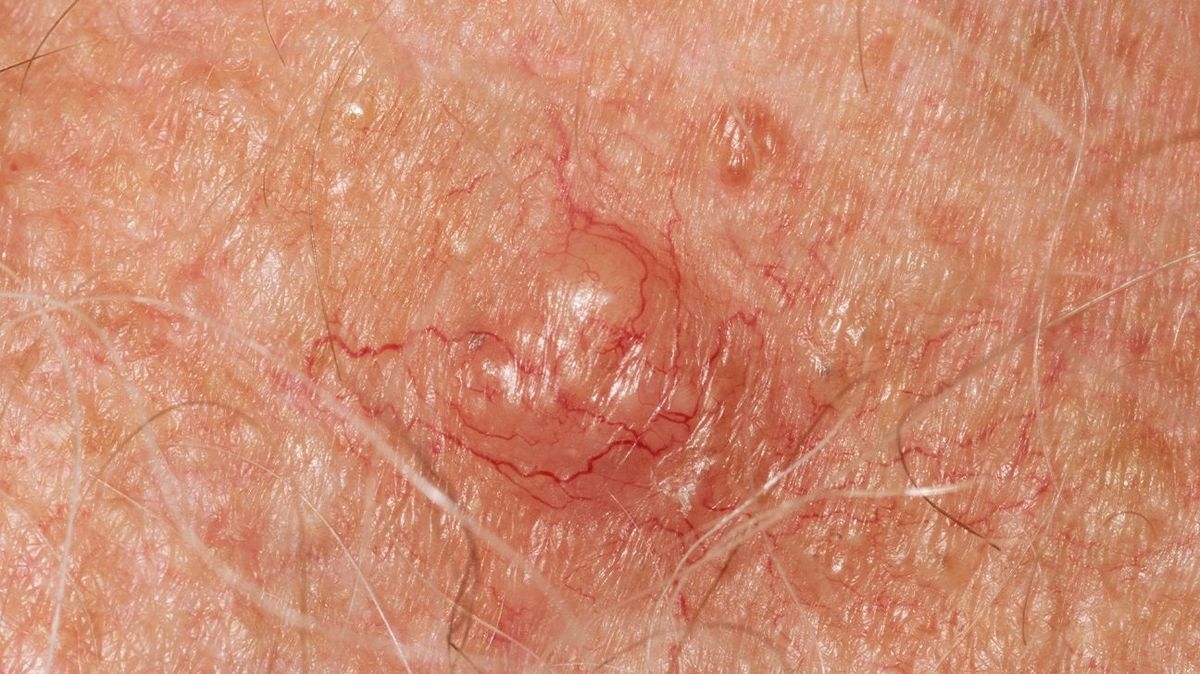
Basal cell carcinoma (BCC) is the most common form of skin cancer. It belongs to skin tumors and is characterized by locally invasive growth, meaning that in most cases the tumor spreads locally and rarely metastasizes. BCC is also commonly referred to as basalioma and rodent ulcer. In this type of cancer, more than one primary lesion may develop over time, making regular monitoring important. The main risk factor for the development of basal cell carcinoma is ultraviolet (UV) radiation from the sun. Prolonged sun exposure, repeated sunburns, and skin photoaging significantly increase the likelihood of developing the disease. Individuals with fair skin, blue eyes, and light-colorxed hair are at higher risk; however, BCC can develop in any skin type. Additional risk factors include age, a history of previous skin cancer, immunosuppression, chronic mechanical skin damage, radiation exposure, and certain genetic syndromes. Clinically, basal cell carcinoma often appears as a slowly growing nodule or patch that may be skin-colorxed, pink, or pigmented. It is typically characterized by a shiny surface, central depression or ulceration, and occasional bleeding. The tumor usually progresses slowly and rarely poses a life-threatening risk; however, timely diagnosis and treatment are essential to prevent local tissue damage. There are several clinical types of basal cell carcinoma. The most common is the nodular form, which frequently occurs on the face and presents as a shiny, “pearly” nodule. Another common type is the superficial form, which more often develops on the upper trunk and appears as a flat, slightly scaly patch. Early detection and appropriate treatment of basal cell carcinoma significantly improve the prognosis. In case of any suspicious skin changes, consultation with a dermatologist and appropriate diagnostic evaluation is recommended.
Read More
Harlequin ichthyosis – causes, symptoms, and management
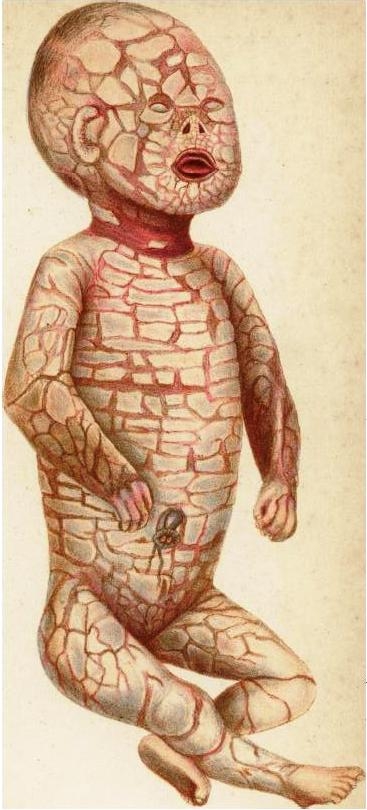
Harlequin ichthyosis — Causes, Symptoms, and Management Harlequin ichthyosis is a rare and severe congenital genetic skin disorder that belongs to the group of congenital ichthyoses. The condition is characterized by extreme skin thickening and severe impairment of the skin barrier function, leading to life-threatening complications beginning in the neonatal period. What Causes Harlequin Ichthyosis? The disease is caused by mutations in the ABCA12 gene. This gene is responsible for lipid transport within the epidermis and for the proper formation of the skin’s protective barrier. Harlequin ichthyosis is inherited in an autosomal recessive pattern, meaning both parents are typically asymptomatic carriers of the condition. Incidence: approximately 1 case per 300,000 live births. Clinical Features of Harlequin Ichthyosis; Skin Findings Present at birth Severely thickened skin covered with large, shiny, hyperkeratotic plates Deep, red fissures between the plates Facial Features Severe ectropion (outward turning of the eyelids), increasing the risk of conjunctival and corneal dryness, infection, and trauma Nasal hypoplasia, erosion of the nasal alae, and nasal obstruction Ears may be underdeveloped, flattened, or in some cases absent Tight perioral skin causing eclabium (eversion of the lips) Limbs; Limbs covered with thick hyperkeratotic skin Possible digital hypoplasia or extra digits Impaired thermoregulation — thickened skin interferes with sweat gland function and heat dissipation Excessive fluid loss leading to dehydration Possible Complications Severe infections due to impaired skin barrier Joint contractures and limb constriction caused by thickened skin, potentially resulting in edema, necrosis, and autoamputation Respiratory distress, as rigid skin restricts chest expansion, leading to hypoventilation and respiratory failure How Is the Diagnosis Made; In most cases, diagnosis is established at birth based on characteristic clinical features. If there is a known family history, the following may be performed: — Prenatal genetic testing (detection of ABCA12 gene mutation) — Suspicious findings on ultrasound during the second or third trimester — Genetic analysis for confirmation Treatment and Management Harlequin ichthyosis requires urgent and intensive management in a neonatal intensive care unit (NICU). Treatment includes: Placement in a high-humidity incubator Strict monitoring of fluids and nutrition Regular skin hydration and gentle skin care Prevention and prompt treatment of infections Prognosis Historically, Harlequin ichthyosis was often fatal during the neonatal period. Modern intensive care and systemic retinoid therapy have significantly improved survival rates. The condition is chronic and requires lifelong multidisciplinary care, including dermatologists, neonatologists, pediatricians, geneticists, and other specialists. Physical development may be delayed; however, intellectual development is usually normal. When Is Genetic Counseling Recommended? If there is a family history of Harlequin ichthyosis If both parents are carriers During pregnancy planning, for risk assessment and informed decision-making
Read More
Services
All Services